Physical Address
304 North Cardinal St.
Dorchester Center, MA 02124
Physical Address
304 North Cardinal St.
Dorchester Center, MA 02124

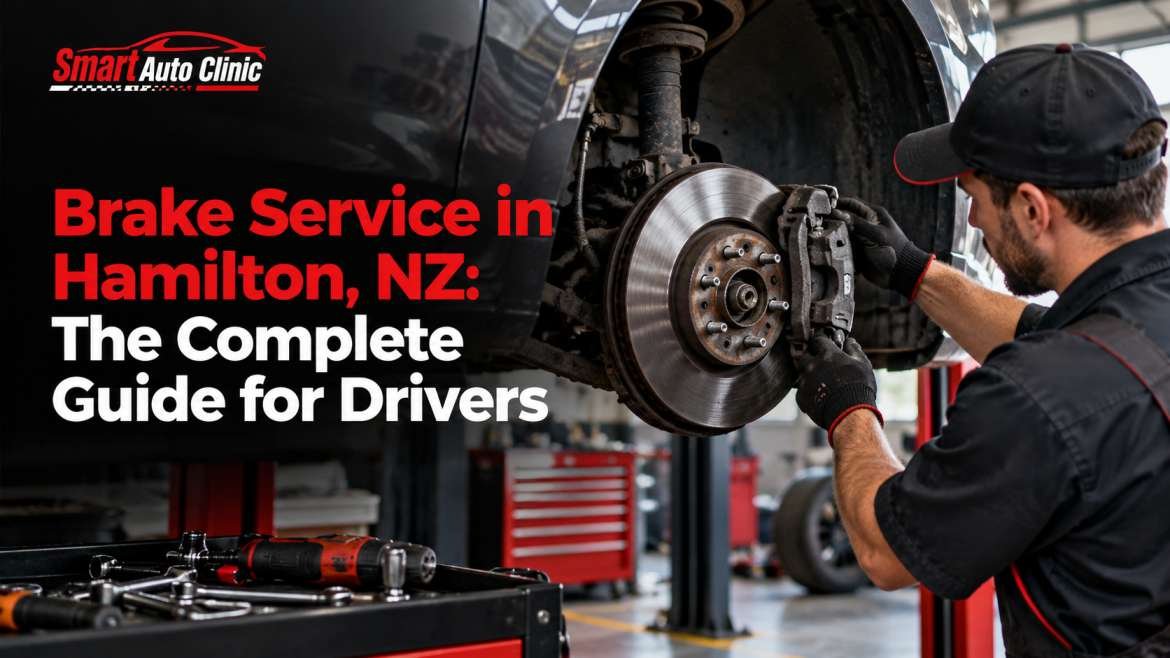
Most of us don’t think about our brakes until something goes wrong. A strange noise, a soft pedal or a failed WoF suddenly makes them the most important part of the car. If you’re searching for a brake service in Hamilton, New Zealand, this guide covers what to look for, what a proper service involves and how to avoid paying for repairs you don’t need.
Every time you press the pedal, friction slows the car. Pads or shoes press against discs or drums, and that friction gradually wears the material away. How quickly that happens depends on how and where you drive.
In Hamilton, a few things speed it up:
Because wear is gradual, you rarely notice it happening. That’s why regular checks matter more than waiting for a warning.
If you notice any of these, book a brake check as soon as you can.
1. Squealing or squeaking. Many brake pads have a small metal wear indicator that squeals when the pads are getting low. It’s an early warning, so take it seriously.
2. Grinding noises. A harsh, metallic sound usually means the pad material is gone and metal is rubbing on metal. This can quickly damage the discs and turn a small job into an expensive one.
3. The car pulls to one side. If the car drifts left or right when you brake, one side may be gripping harder than the other. A sticking calliper or uneven pad wear is a common cause.
4. A shaking steering wheel or pulsing pedal. This often points to warped or uneven discs.
5. A soft or spongy pedal. If the pedal sinks further than it used to, there could be air or moisture in the brake fluid, or a leak somewhere in the system.
6. A dashboard warning light. Don’t ignore a brake light. It can mean low fluid, worn pads or a fault in the system.
7. Longer stopping distances. If it feels like the car takes more road to stop, trust that instinct.
A good brake service is more than swapping pads. Here’s what you should expect from a quality workshop.
Inspection. The mechanic checks the pads or shoes, discs or drums, callipers, brake hoses and lines. They look for wear, leaks, rust, cracks and anything that doesn’t move freely.
Measuring. Pad thickness and disc condition are measured against safe limits, so the recommendation is based on facts and not guesswork.
Brake fluid check. Brake fluid absorbs moisture over time, which lowers its performance and can corrode parts from the inside. Fluid that’s old or contaminated should be replaced.
Repairs and replacement. If parts are worn, they’re replaced. Discs and drums that are still within limits can sometimes be machined smooth instead of replaced, which can save you money.
Road test. After the work, the vehicle should be road tested to confirm the brakes feel smooth, even and responsive.
You can see the full range of work on our brake and clutch service page.
Brake terms can be confusing, so here’s a quick guide.
Knowing which type your car has helps you understand your quote and ask the right questions.
There’s no single answer, because it depends on your vehicle and driving. As a general guide:
Brake fluid is usually replaced every couple of years regardless of mileage, so check your handbook for the recommended interval.
In New Zealand, brakes are one of the main areas checked during a Warrant of Fitness inspection. Worn pads, leaking fluid or damaged hoses can all cause a fail. Getting a brake service before your WoF is due can save you the cost and hassle of a re-check, and if you do fail, you can have the repairs done and get back on the road quickly. Learn more about our WoF inspections.
Not every workshop is the same. When you’re choosing where to book, look for:
At Smart Auto Clinic, we’re a Goodyear Autocare Centre at 136 Riverlea Road, Hillcrest. We provide brake checks, pad and shoe replacement, disc and drum machining, brake fluid and hose checks and hydraulic repairs, along with clutch service and overhauls.
We offer a free consultation and quote, courtesy cars, and free Wi-Fi and coffee or tea while you wait. We’re open Monday to Saturday from 8:00 AM to 5:00 PM, and Sundays by appointment.
If your brakes are squealing, pulling or feeling different, don’t wait for it to get worse. Call us on 07 949 8929, email info@smartautoclinic.co.nz or book online. A quick check today could save you a much bigger repair later.